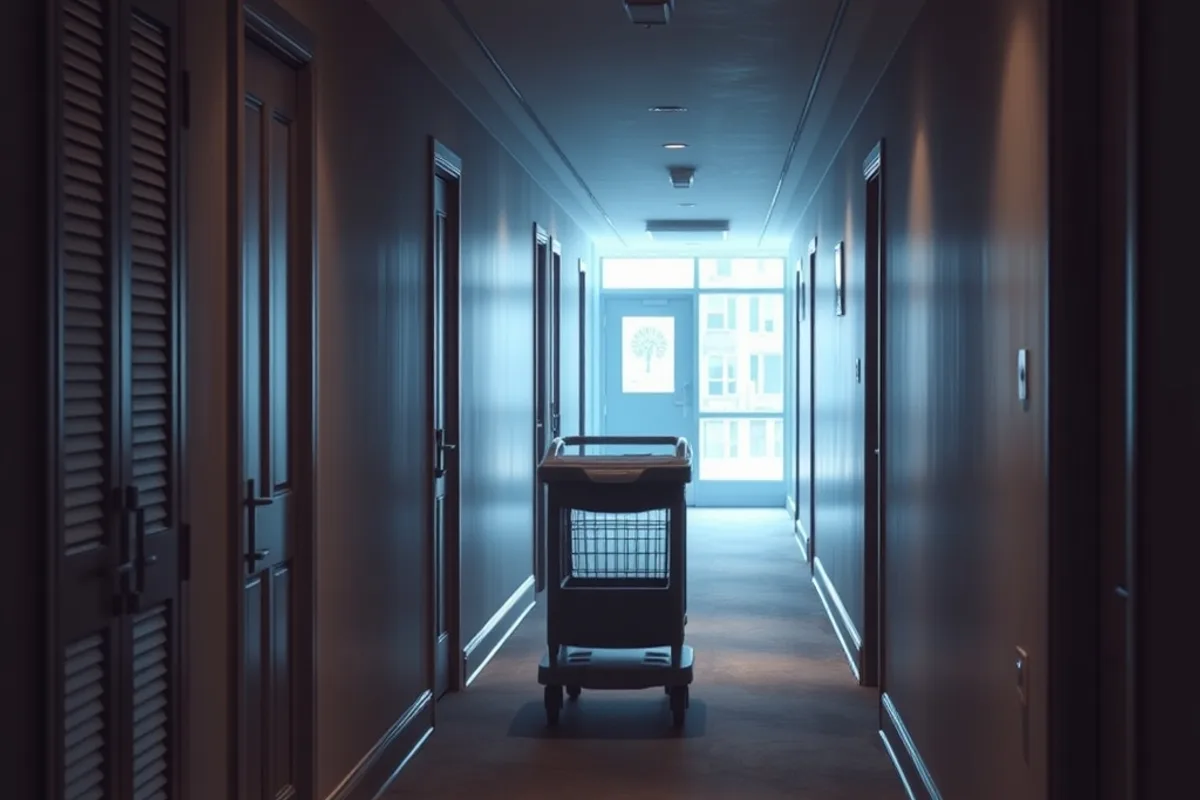
The room looks effortless. White bed, white towels, a kettle, two glasses, a television with a welcome screen. You drop your bag, open the window, and the hotel does what it promised. What you are looking at is the end of a process that involves at least four people, a laundry, a trolley, a checklist and about twenty-five minutes of concentrated physical work.
Housekeeping is the largest department in most full-service hotels and the least visible to guests. It is also where the economics of a hotel are most exposed. A room rate that looks generous at midnight can look very different when you count the labour required to turn the room around before the next guest arrives.
The invisible half-hour
In a mid-market hotel, a housekeeper is typically expected to clean between twelve and sixteen rooms in a shift. That works out at roughly twenty-five to thirty minutes per room, depending on the state it was left in. A checkout room takes longer than a stayover; a room with a sofa bed or a kitchenette takes longer again.
The work is not simply tidying. It is a sequence: strip the bed, bag the linen, check under the mattress, clean the bathroom, restock, dust, vacuum, wipe the remote, check the minibar, replace the glasses, fold the towels to the hotel's standard, and report anything broken. In a good hotel, the sequence is designed to reduce walking and lifting. In a bad one, it is a list of instructions with no thought for the body doing it.
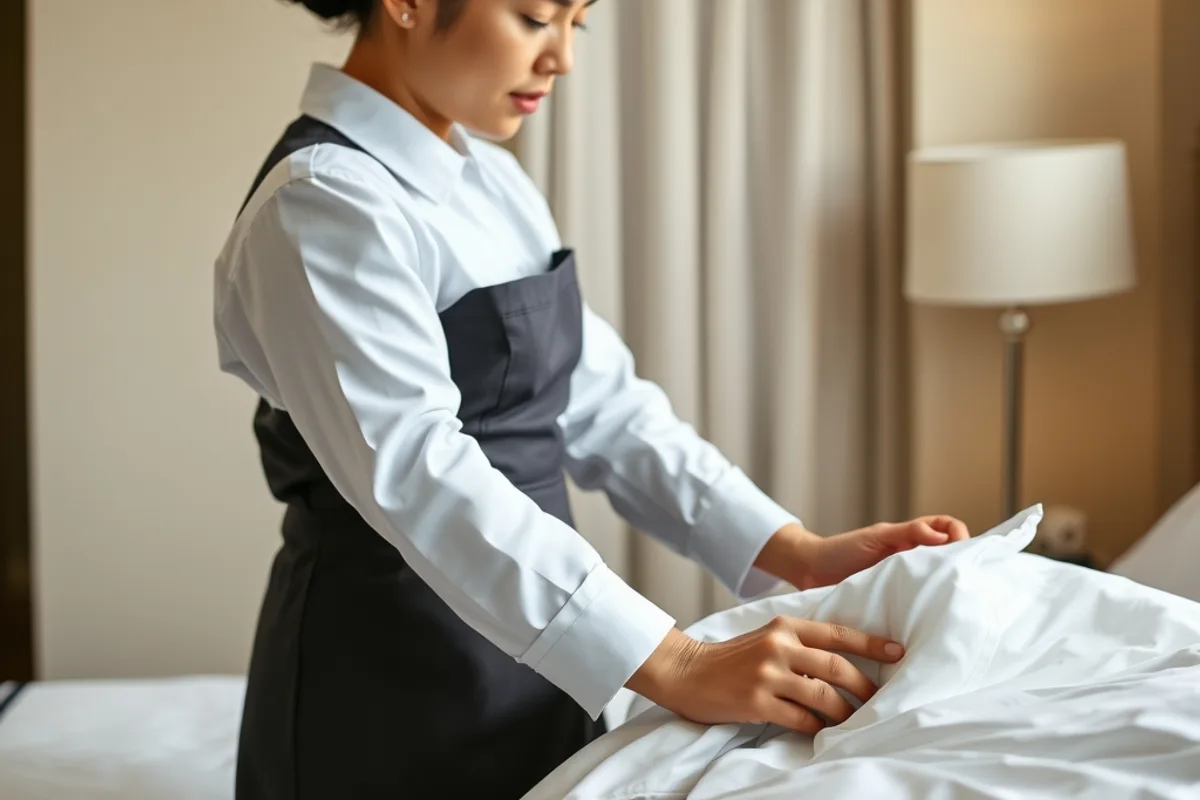
The half-hour is also where quality is made. A guest notices a hair in the sink, a mark on the duvet, a ring on the desk. They do not notice the twenty other things that were done correctly. That asymmetry is the housekeeper's daily reality.
The maths of a checkout
Take a hotel with 120 rooms and an average occupancy of 80 per cent. That is roughly 96 rooms sold a night. If half are checkouts and half are stayovers, the housekeeping team is turning around 48 rooms in a morning, plus servicing 48 more. At 25 minutes each, that is 40 hours of work before anyone has folded a towel for the lobby.
Add supervisors, linen transport, laundry, chemicals, equipment and the front-desk coordination required to know which rooms are free. The cost per occupied room is not trivial. In many markets, cleaning and linen together account for a meaningful share of the cost of a stay — often more than the energy bill, and sometimes more than the commission paid to a booking site.
This is why hotels care so much about checkout times, late checkouts and early check-ins. It is not arbitrary rigidity. It is a production schedule. A guest who keeps a room until 2 p.m. is not just inconveniencing the desk; they are compressing the window in which a room can be cleaned and sold again.
Why the clock matters
The standard checkout at eleven and check-in at three exists to create a four-hour window. In that window, the hotel must clean the rooms, inspect them, fix anything that failed, and prepare the arrivals list. When occupancy is high and staffing is tight, the window is the difference between a smooth afternoon and a queue at reception.
Hotels have tried to solve this with technology: app-based room assignments, sensor data, digital checklists. The technology helps, but it does not change the fundamental constraint. Someone still has to make the bed.
The other constraint is the human one. Housekeepers are often paid close to the minimum wage, work in physically demanding conditions, and have limited control over their pace. A hotel that schedules too tightly to save money will see the cost elsewhere: turnover, injury, missed details, and a reputation that is hard to repair.
The linens
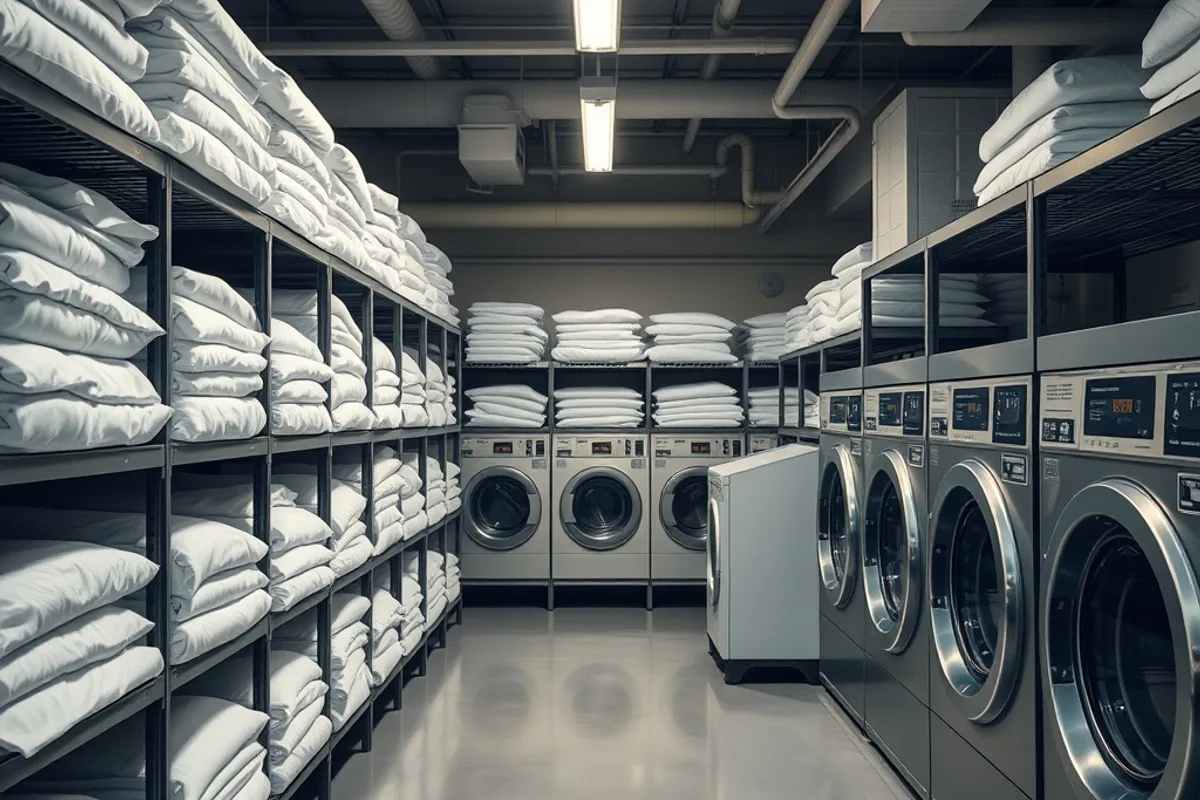
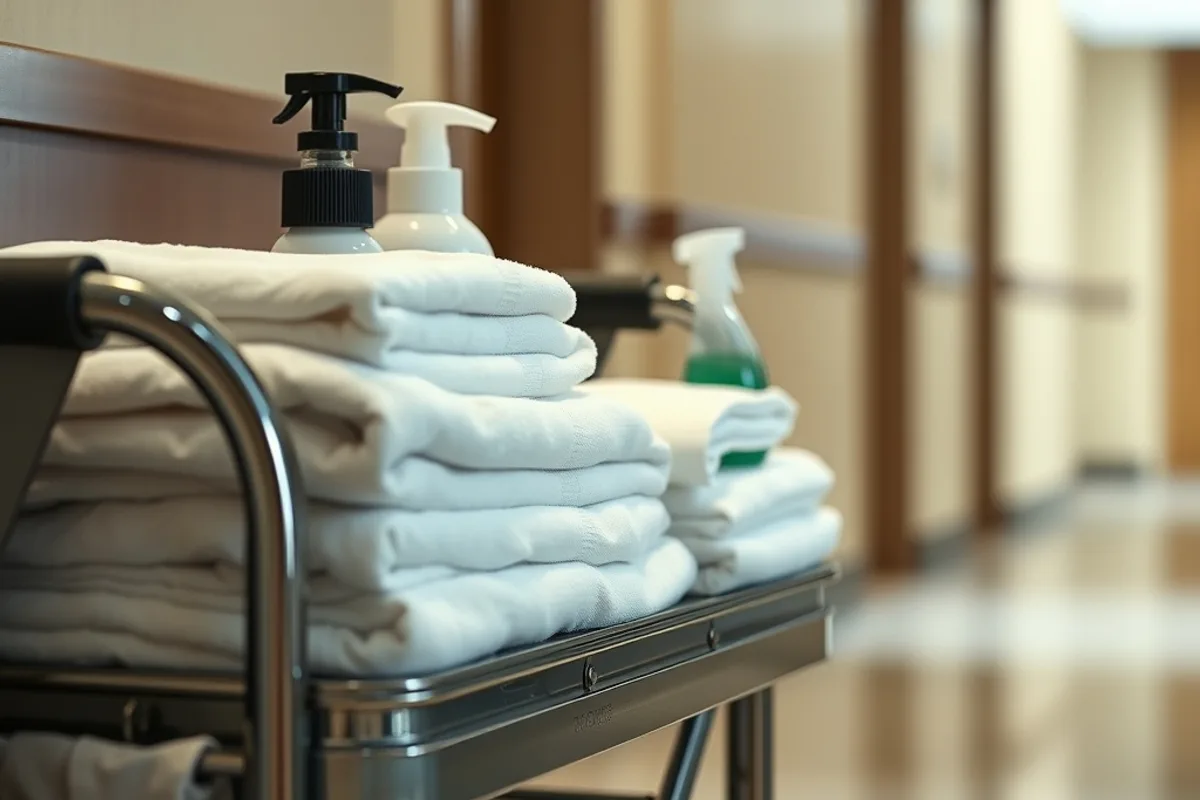
Linen is the hidden infrastructure of hospitality. A hotel may own three or four sets of sheets per bed, plus towels, bath mats, duvet covers and pillowcases. These are washed, dried, ironed and transported between the hotel and a laundry, often every day.
The environmental cost is significant. Laundry uses water, energy and detergent, and the transport adds emissions. Hotels have responded with opt-out programmes for towels and sheets, but the savings are smaller than the marketing suggests, because the laundry still has to run for the rooms that do require service.
The quality cost is also real. Cheap linen pills and tears; expensive linen lasts longer but costs more upfront. A hotel that replaces its linen every eighteen months is making a calculation about appearance, durability and cash flow. Guests experience the result as either crispness or a slightly tired sheet.
What guests can do
Small things help. Leave the room in a reasonable state: put rubbish in the bin, keep towels together, do not leave food in the sink. Use the opt-out card if you genuinely do not need a change of linen. Respect the checkout time, or ask politely for a late checkout rather than assuming one.
Tip if you can. In many countries, housekeeping staff rely on tips, and a note left with a small amount is a direct signal that the work was seen. It is not a substitute for fair wages, but it is a recognition that costs the guest very little.
And notice the room. The next time you walk into a clean hotel room, think about the twenty-five minutes that produced it. The effort is not a secret. It is simply designed to be invisible.